A professional home inspection is a non-invasive, visual examination of the accessible areas of a residential property. Whether you are in Lewisburg, WV, or across the border in Virginia, the standards of practice (SOP) established by InterNACHI and state licensing boards ensure that every major system is evaluated for safety and function.
At The Inspection Company LLC, we follow these rigorous national and state guidelines to ensure nothing is overlooked. Here is a detailed breakdown of what is included in a standard home inspection.
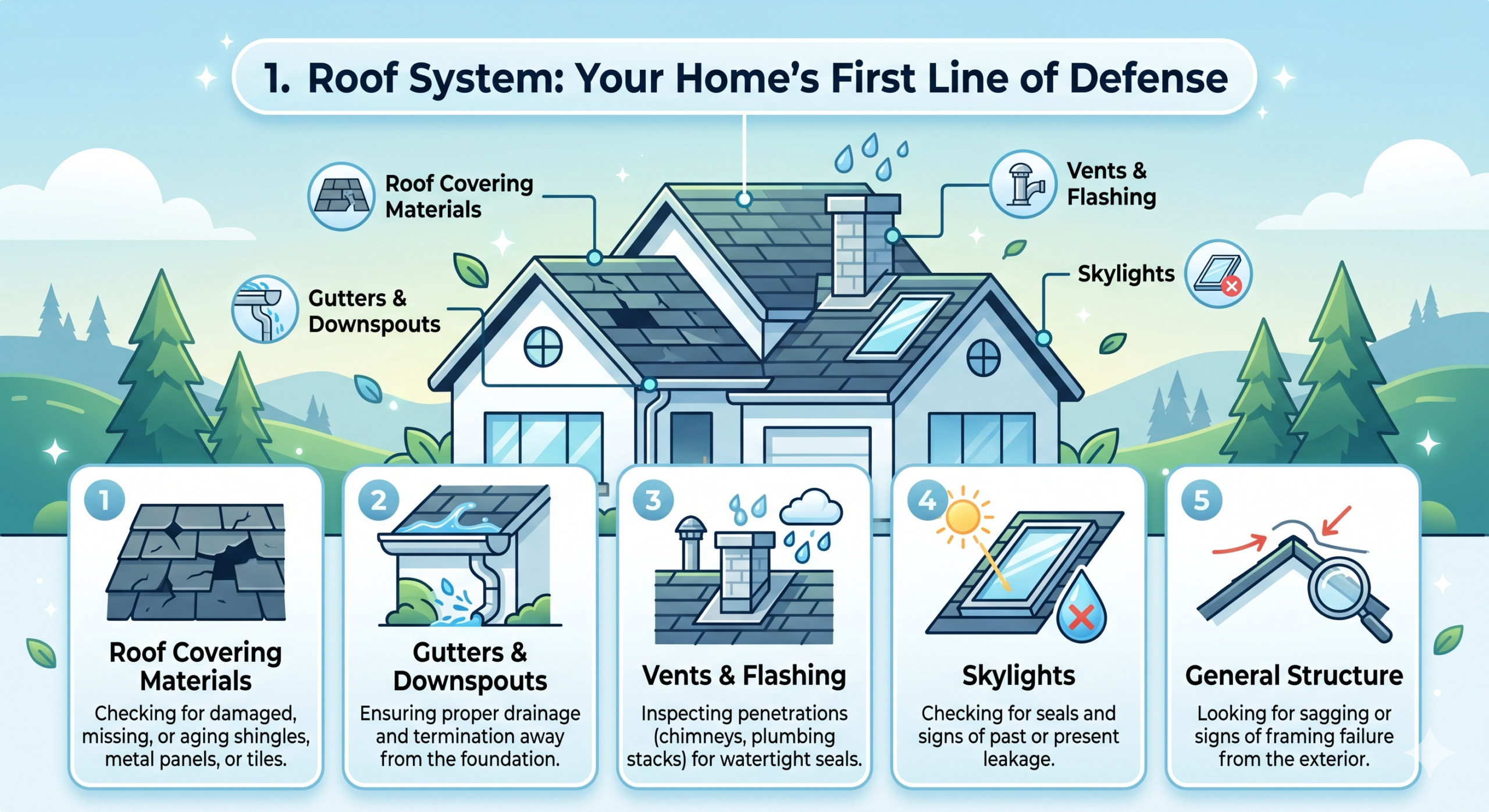
1. Roof System
The roof is your home’s first line of defense against the West Virginia elements. We inspect:
-
Roof Covering Materials: Checking for damaged, missing, or aging shingles, metal panels, or tiles.
-
Gutters & Downspouts: Ensuring proper drainage and termination away from the foundation.
-
Vents & Flashing: Inspecting penetrations (chimneys, plumbing stacks) for watertight seals.
-
Skylights: Checking for seals and signs of past or present leakage.
-
General Structure: Looking for sagging or signs of framing failure from the exterior.
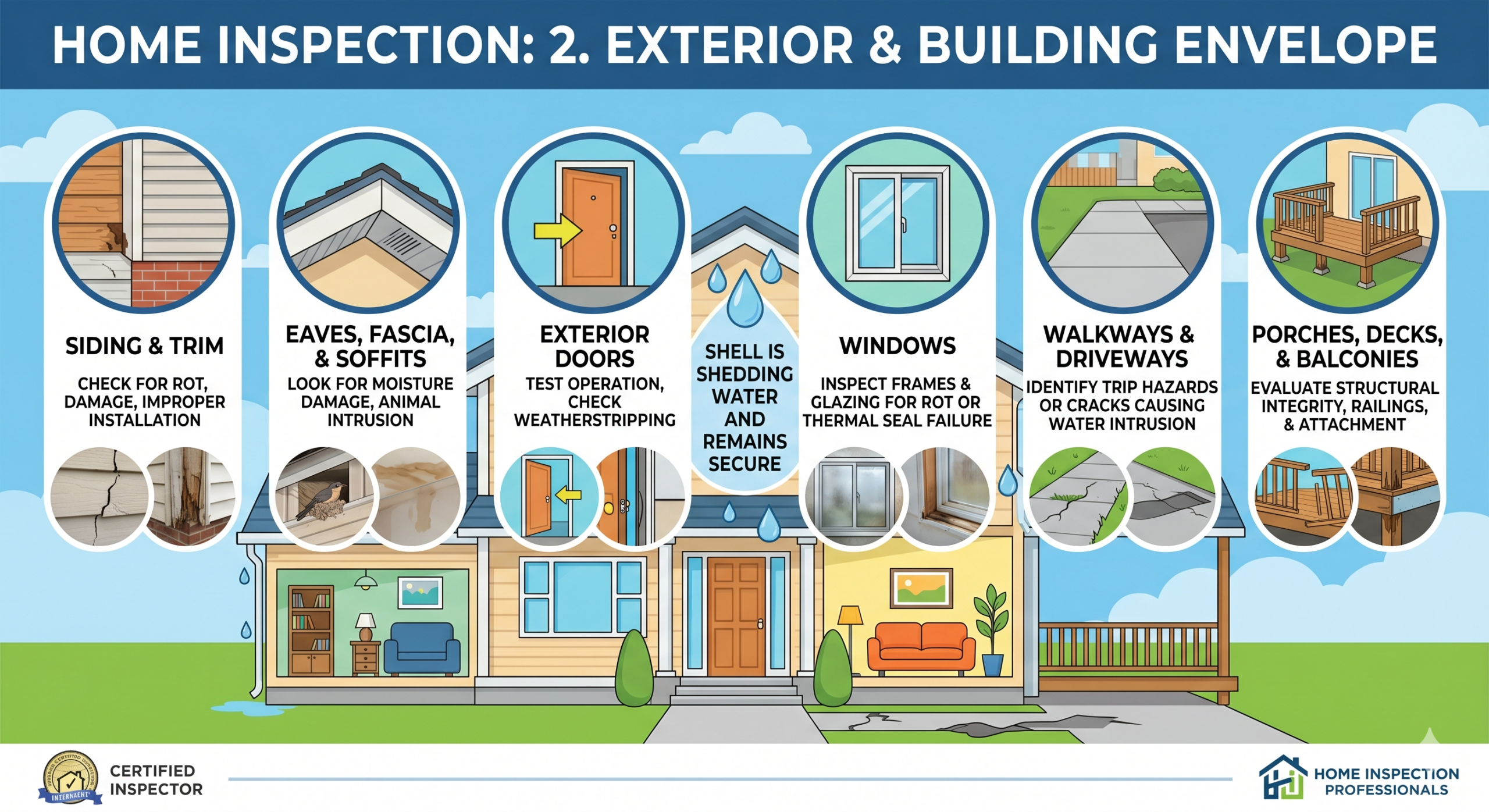
2. Exterior & Building Envelope
We evaluate the home’s “shell” to ensure it is shedding water and remains secure:
-
Siding & Trim: Checking for rot, damage, or improper installation of wood, vinyl, or brick.
-
Eaves, Fascia, & Soffits: Looking for animal intrusion or moisture damage.
-
Exterior Doors: Testing operation and checking weatherstripping.
-
Windows: Inspecting frames and glazing for rot or thermal seal failure.
-
Walkways & Driveways: Identifying trip hazards or cracks that may lead to water intrusion.
-
Porches, Decks, & Balconies: Evaluating structural integrity, railings, and proper attachment to the house.
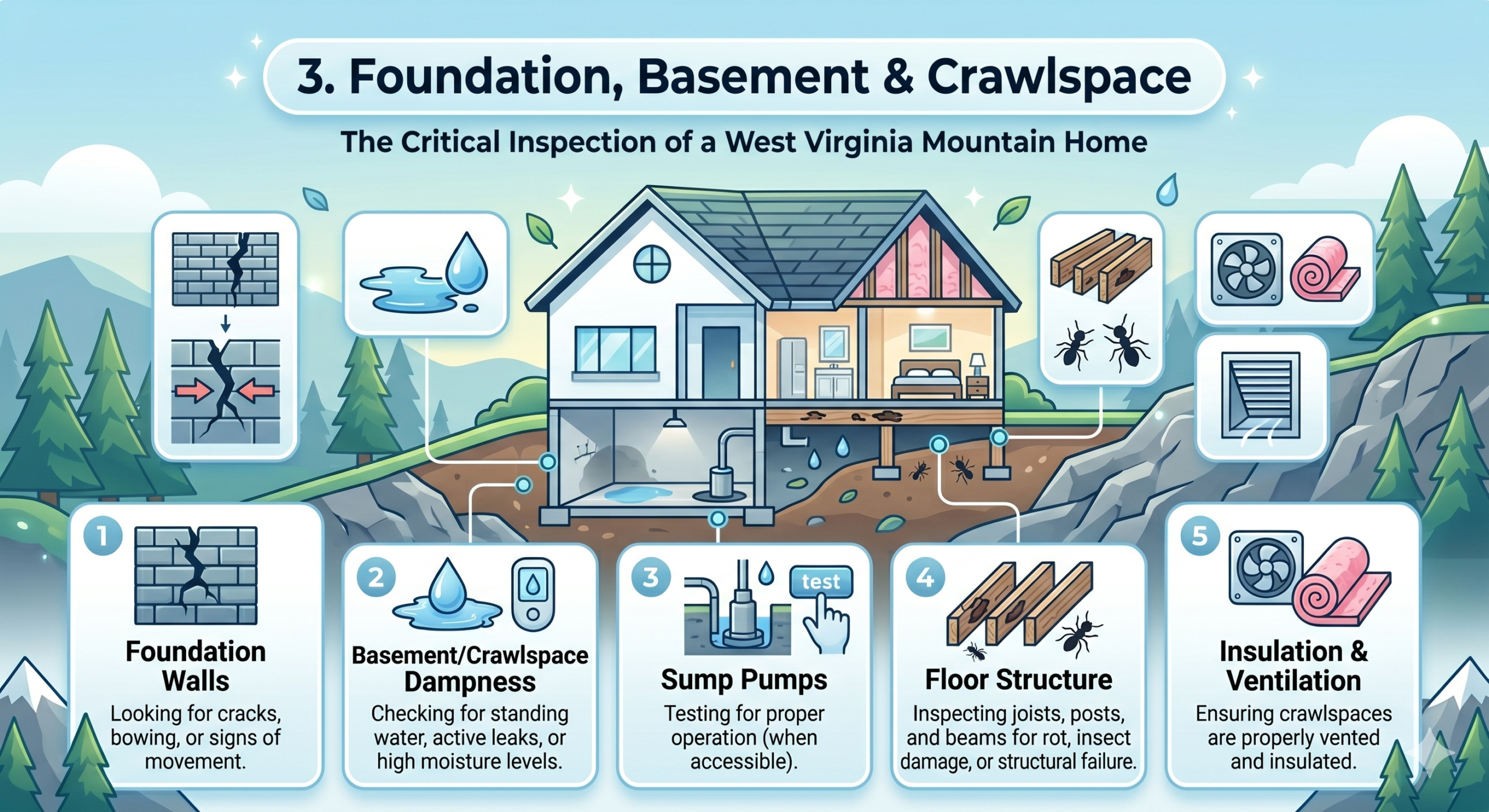
3. Foundation, Basement & Crawlspace
This is the most critical part of a West Virginia mountain home inspection:
-
Foundation Walls: Looking for cracks, bowing, or signs of movement.
-
Basement/Crawlspace Dampness: Checking for standing water, active leaks, or high moisture levels.
-
Sump Pumps: Testing for proper operation (when accessible).
-
Floor Structure: Inspecting joists, posts, and beams for rot, insect damage, or structural failure.
-
Insulation & Ventilation: Ensuring crawlspaces are properly vented and insulated.
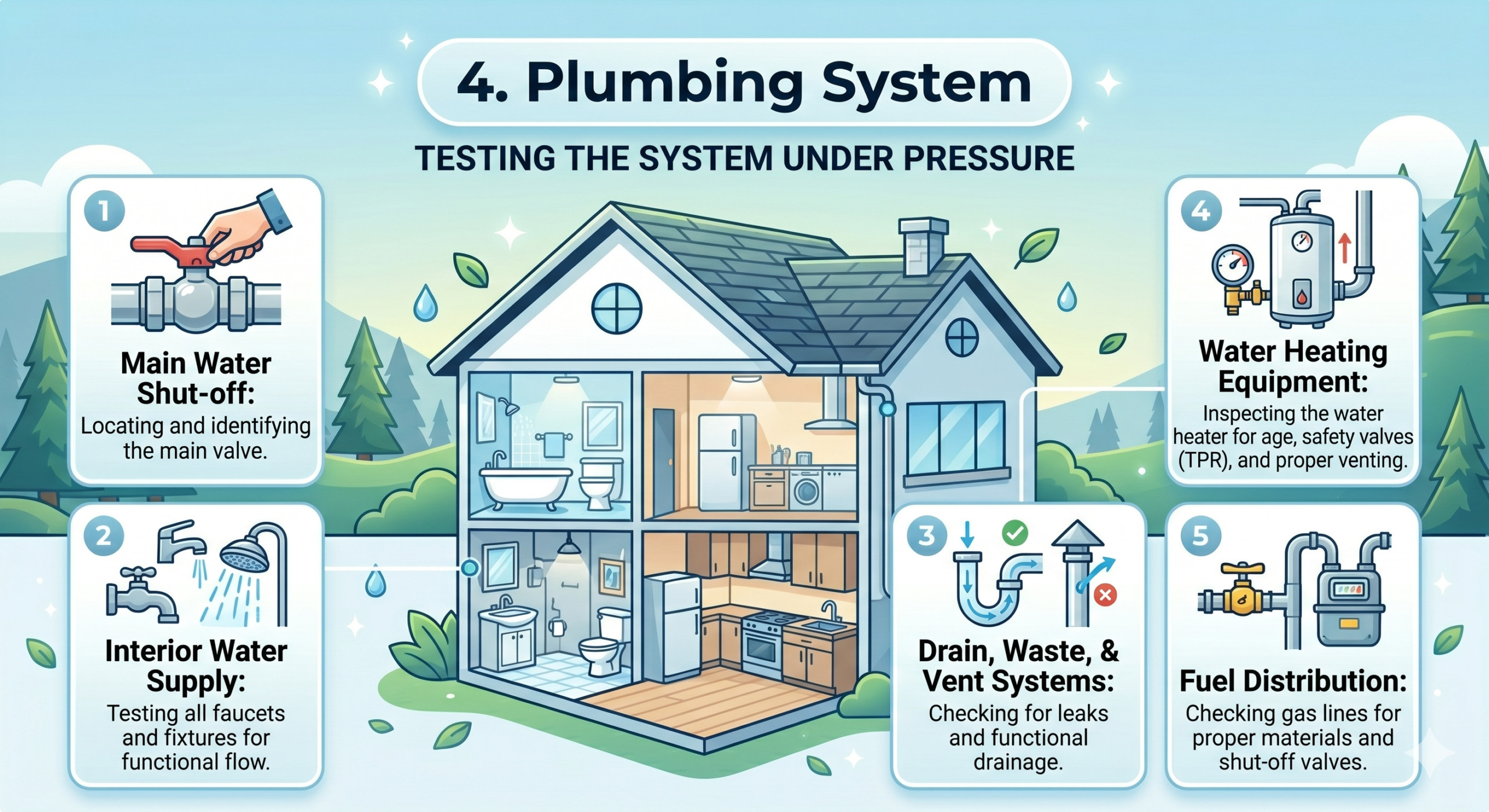
4. Plumbing System
We run water throughout the home to test the system under pressure:
-
Main Water Shut-off: Locating and identifying the main valve.
-
Interior Water Supply: Testing all faucets and fixtures for functional flow.
-
Drain, Waste, & Vent Systems: Checking for leaks and functional drainage.
-
Water Heating Equipment: Inspecting the water heater for age, safety valves (TPR), and proper venting.
-
Fuel Distribution: Checking gas lines for proper materials and shut-off valves.
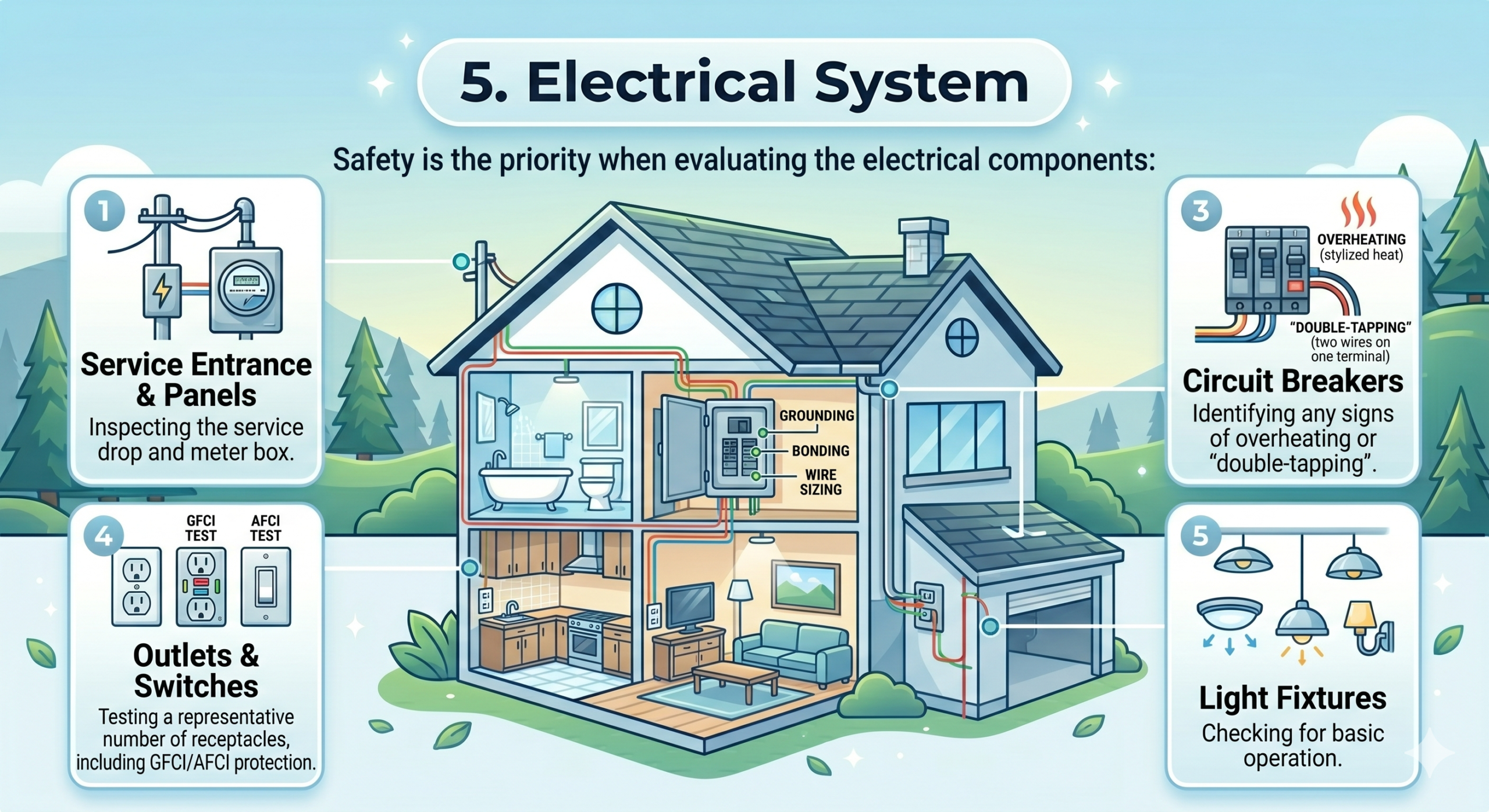
5. Electrical System
Safety is the priority when evaluating the electrical components:
-
Service Entrance: Inspecting the service drop and meter box.
-
Main Disconnect & Panels: Checking for proper grounding, bonding, and wire sizing.
-
Circuit Breakers: Identifying any signs of overheating or “double-tapping.”
-
Outlets & Switches: Testing a representative number of receptacles, including GFCI/AFCI protection.
-
Light Fixtures: Checking for basic operation.
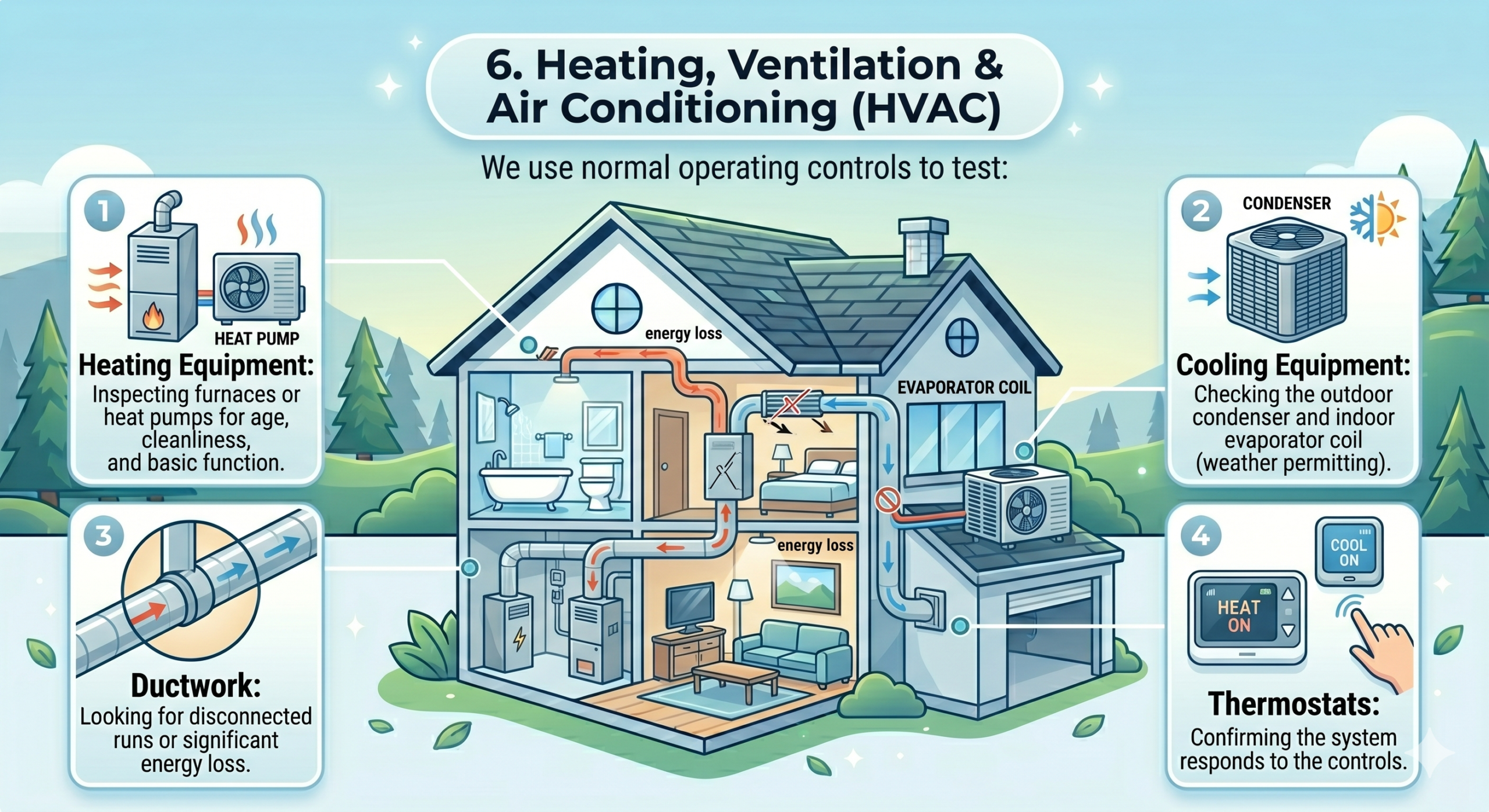
6. Heating, Ventilation & Air Conditioning (HVAC)
We use normal operating controls to test:
-
Heating Equipment: Inspecting furnaces or heat pumps for age, cleanliness, and basic function.
-
Cooling Equipment: Checking the outdoor condenser and indoor evaporator coil (weather permitting).
-
Ductwork: Looking for disconnected runs or significant energy loss.
-
Thermostats: Confirming the system responds to the controls.
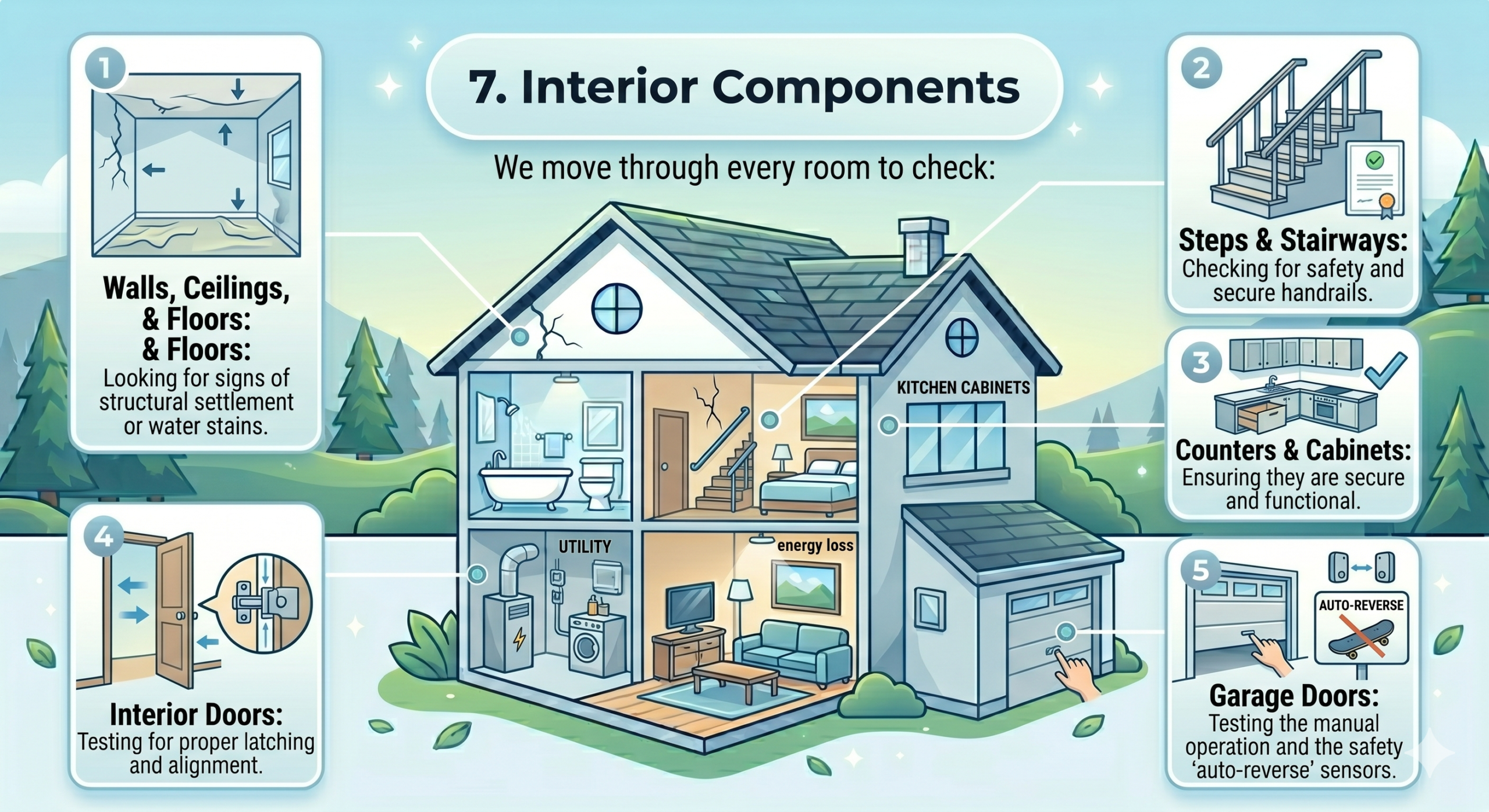
7. Interior Components
We move through every room to check:
-
Walls, Ceilings, & Floors: Looking for signs of structural settlement or water stains.
-
Steps & Stairways: Checking for safety and secure handrails.
-
Counters & Cabinets: Ensuring they are secure and functional.
-
Interior Doors: Testing for proper latching and alignment.
-
Garage Doors: Testing the manual operation and the safety “auto-reverse” sensors.
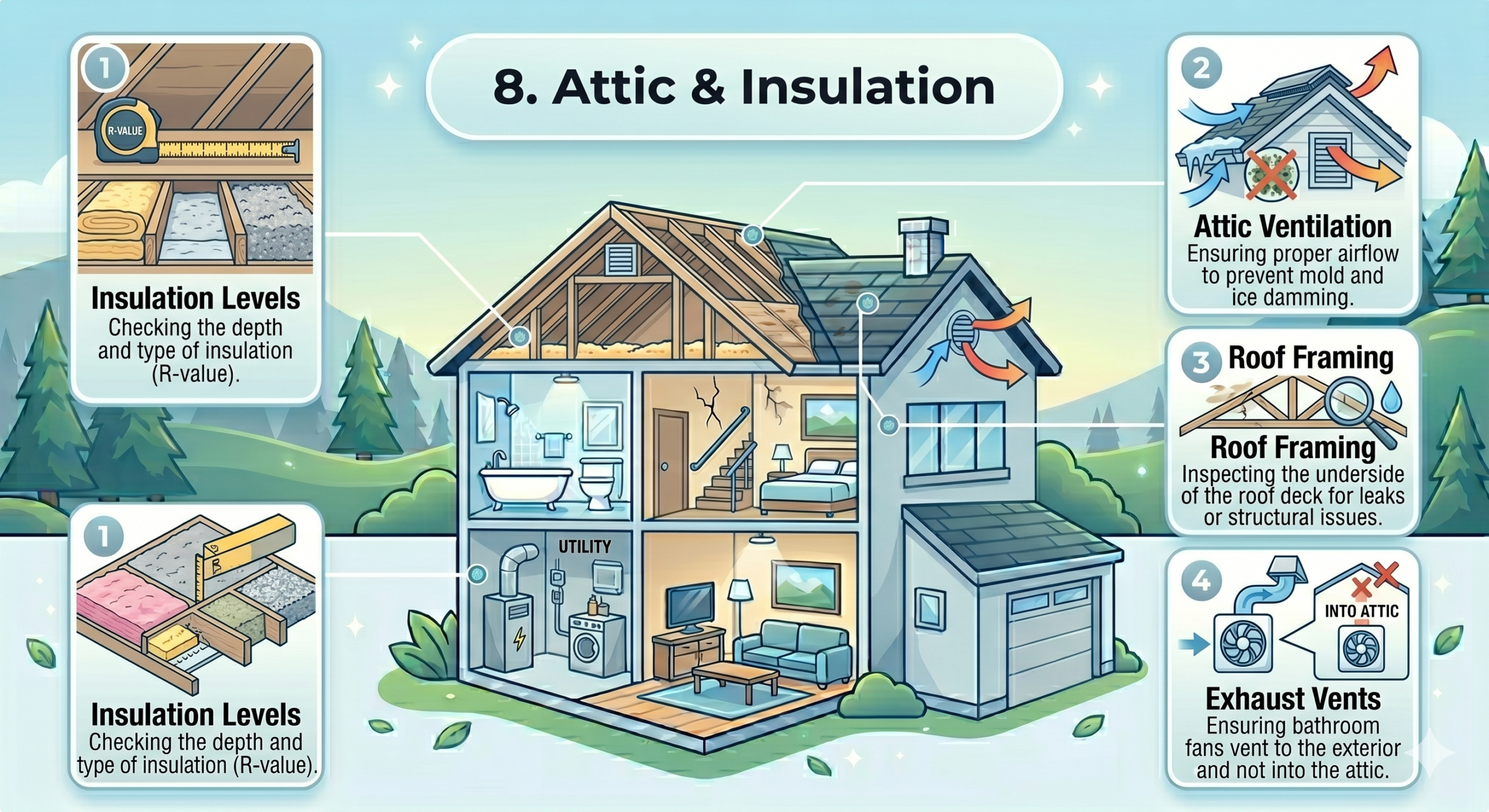
8. Attic & Insulation
-
Insulation Levels: Checking the depth and type of insulation (R-value).
-
Attic Ventilation: Ensuring proper airflow to prevent mold and ice damming.
-
Roof Framing: Inspecting the underside of the roof deck for leaks or structural issues.
-
Exhaust Vents: Ensuring bathroom fans vent to the exterior and not into the attic.
The “Safe & Sound” Difference
While many items are covered, it is important to remember that a home inspection is visual. We do not move furniture, go behind walls, or dismantle equipment. However, with The Inspection Company LLC, you get an inspector who understands the specific nuances of Virginia and West Virginia standards, giving you a clear, modern report you can actually use to negotiate.
Do you have a specific property in mind—perhaps one of those beautiful historic homes near downtown Lewisburg?