Contact Us
WV License: HI4563231-0621
VA License: 3380001852
Proudly Serving


Crawl spaces are often the “out of sight, out of mind” areas of a home. However, whether you are a DIY enthusiast checking on a leak or a professional contractor performing an inspection, understanding crawl space safety is critical. These tight quarters are officially classified by OSHA as “confined spaces,” meaning they present unique hazards that require specific precautions.
Before you even open the hatch, you must know what you are walking (or crawling) into. The most common dangers include:
Atmospheric Hazards: Poor ventilation can lead to oxygen deficiency or the buildup of Radon gas and methane.
Biological Threats: Mold spores, mildew, and animal waste (from rodents or raccoons) can cause severe respiratory distress.
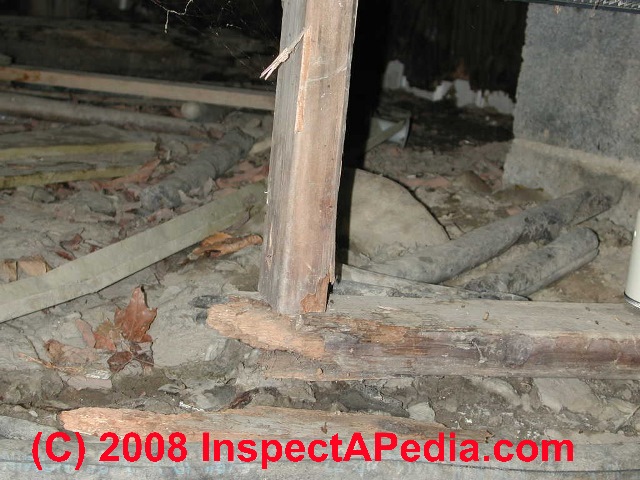
Structural Risks: Rotted floor joists or sagging supports can lead to collapses.
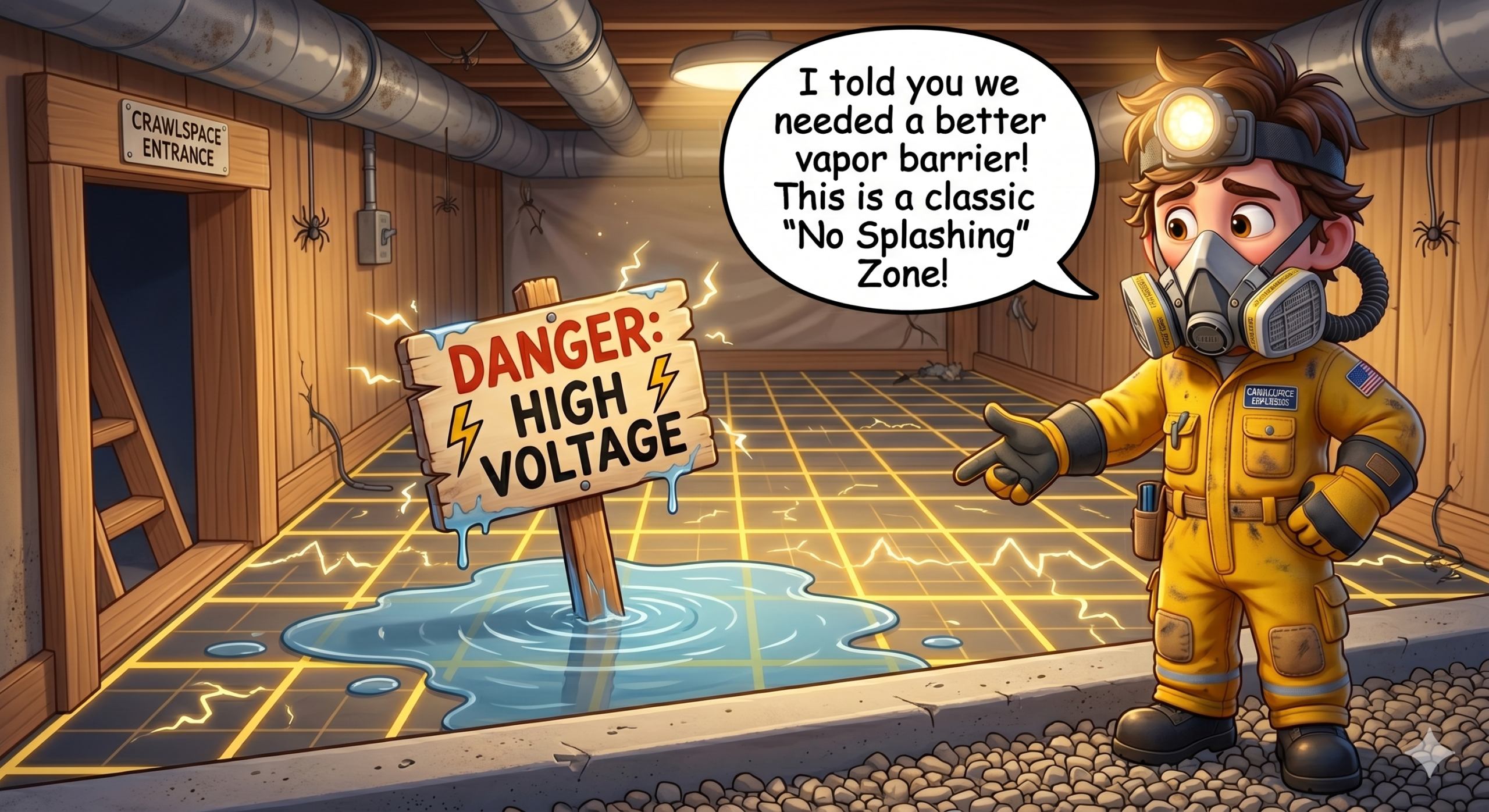
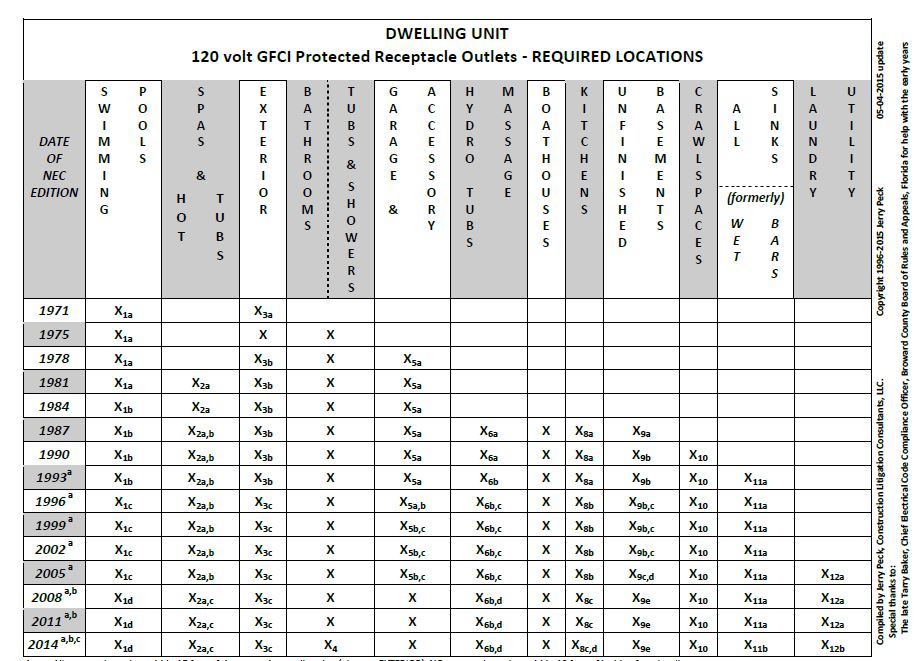
Electrical Dangers: Standing water combined with exposed or “open junction” wiring is a recipe for electrocution.
Pests: Black widows, brown recluse spiders, and agitated wildlife are common residents of dark, damp spaces.
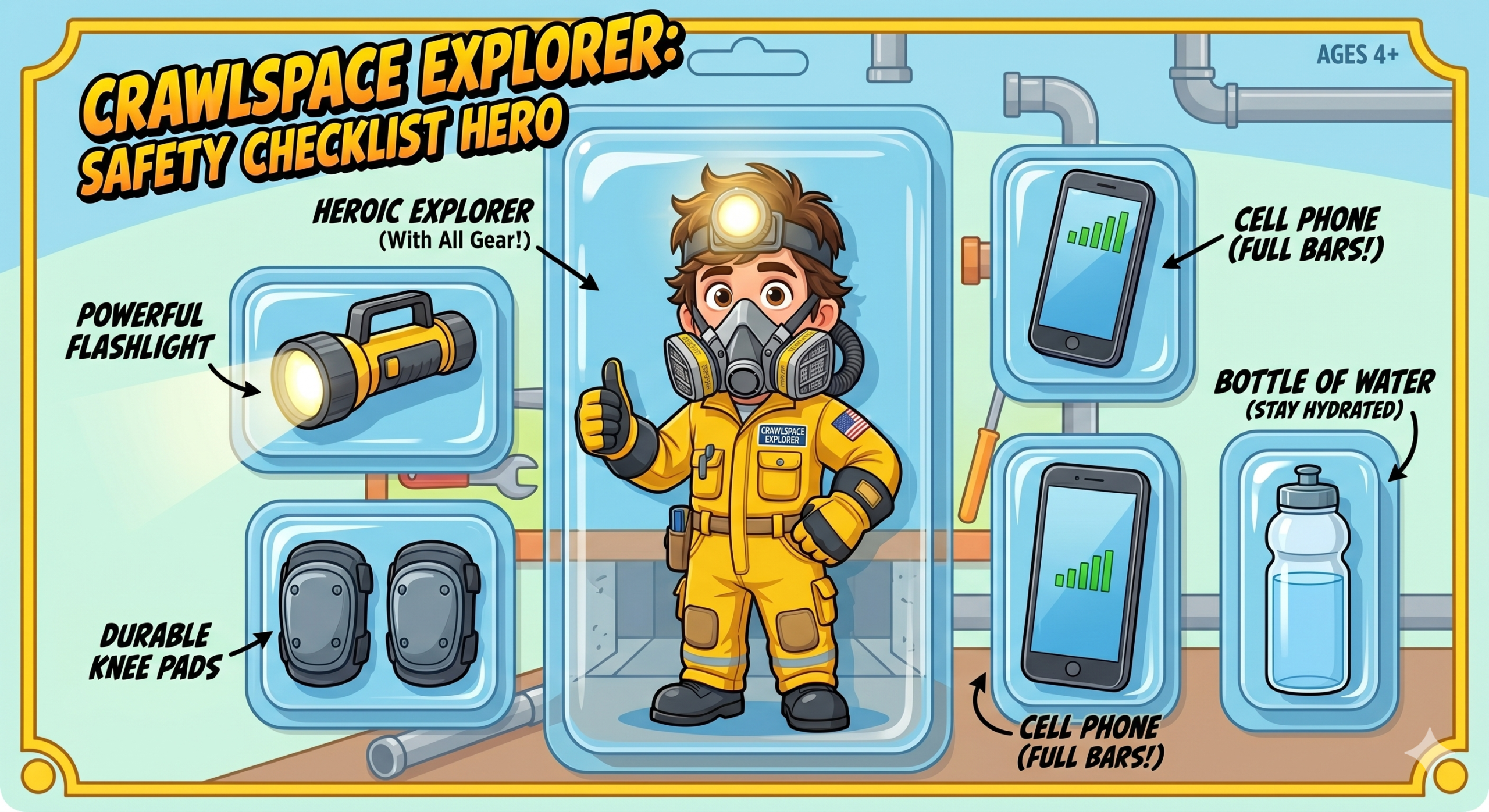
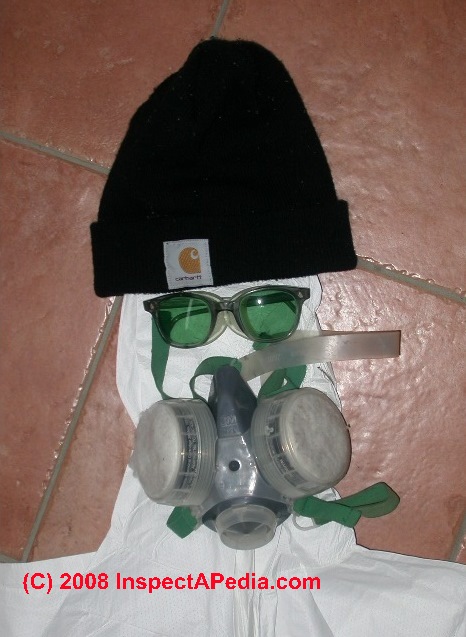
Never enter a crawl space in “street clothes.” To stay safe, you need a specialized “crawl kit”:
| Item | Purpose |
| Respirator (N95 or P100) | Protects against mold spores, dust, and rodent-borne pathogens. |
| Tyvek Suit | A disposable coverall that prevents skin contact with sewage, chemicals, or pests. |
| Impact-Resistant Headlamp | Keeps your hands free while providing high-lumen visibility in dark corners. |
| Heavy-Duty Gloves | Protects against sharp debris, rusted nails, and spider bites. |
| Knee Pads | Essential for preventing bursitis and joint pain during long crawls. |
One of the biggest mistakes in crawl space safety is going in alone without telling anyone.
The Attendant: Always have a “spotter” outside the entry point.
Communication Plan: Ensure you have a working cell phone or radio, though be aware that some foundations (like thick concrete or stone) can block signals.
The Entry Log: For professionals, OSHA 1910.146 regulations may require a formal permit-required confined space program if certain hazards are present.
Before sliding under the house, perform this 30-second “sanity check”:
Sniff Test: Do you smell “rotten eggs” (natural gas) or extreme mustiness (sewage/heavy mold)?
Visual Scan: Shine a high-powered light from the entrance to look for standing water or hanging wires.
Prodding: Use a screwdriver to poke any wood near the entrance to check for advanced wood rot.
While many homeowners can handle a quick visual check, certain tasks are too dangerous for the average person. If you encounter standing water, active sewage leaks, or major structural sagging, it is time to call a professional crawl space remediation team. They have the high-grade ventilation fans and specialized training to handle “Permit-Required” hazards safely.
Safety technology has come a long way. In 2026, many homeowners are opting for crawl space encapsulation to permanently remove these hazards by sealing the space, installing dehumidifiers, and adding permanent lighting. This not only makes the area safer to enter but also improves the overall air quality of the home above.
Are you planning a DIY inspection, or are you looking for tips to ensure your hired contractors are following OSHA standards?
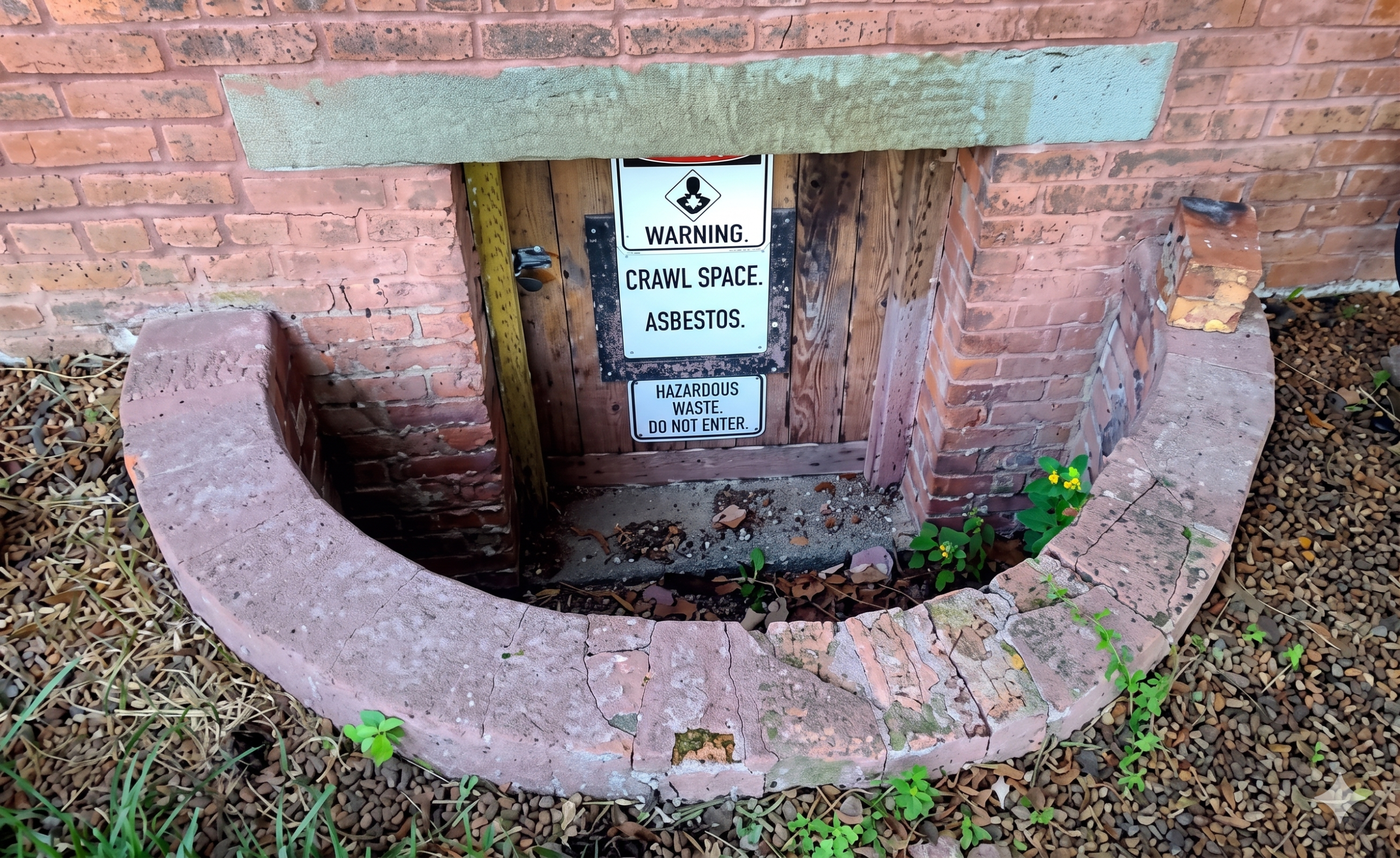
This article lists potentially dangerous or unhealthy conditions that should be evaluated by an inspector or worker who is expected to enter, inspect, or work in a crawl space anywhere in a building.
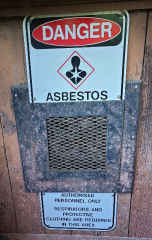
The crawl space is shown in our page top photo, located on the Vassar College campus (Poughkeepsie NY) is locked and carries two CRAWL SPACE WARNING LABELS warning of asbestos hazard, protective gear required, and thus, crawl space access restrictions.
At a property inspection, the decision to enter or not a crawl space or any other area that the inspector may believe is unsafe or inaccessible is made by the inspector on the scene, not by anyone else.
Crawl Space Safety for Home Inspectors
A number of conditions besides the old saw “accessibility” or size of the crawl space opening should be considered carefully by the home inspector, electrical inspector, or anyone who is deciding if it is safe to enter a crawl area anywhere in a building.
Separately at CRAWL SPACE ACCESS we describe codes & standards for accessing building crawl spaces and we describe methods used to enter or inspect crawl areas that are not accessible by normal means of an available hatch or opening or that lack adequate safe space for entry.
If the crawl space has areas of puddles or standing water or even if the soil surface is simply wet there is risk of electrical shock (if wiring or electrical devices are present).
There may also be a chemical contamination risk, especially in older buildings where pesticides may have been applied in the crawl area.
Our photo (left) illustrates a crawl area that is hazardous: we see toilet paper around an abandoned sewer line access or cleanout (now capped off) and we see a newer PVC waste line overhead. Consider the sewage pathogen risks to workers who capped the old waste line and installed the new one.
The sewage-contaminated soil surface debris should have been removed, the area sanitized, and it may have made sense to install new clean plastic ground cover in this area.

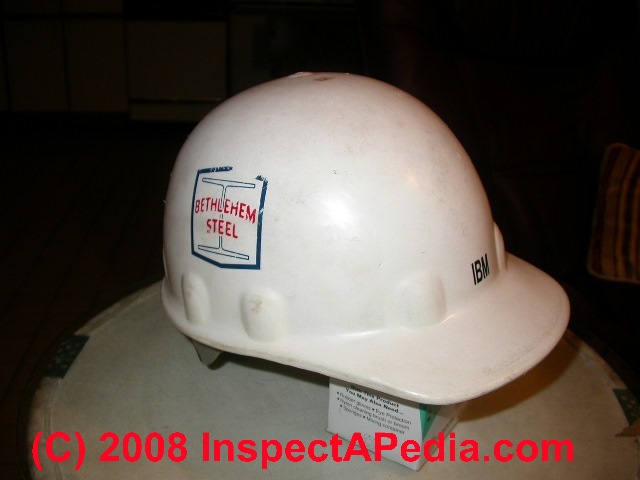
These crawl space safety suggestions are not an exhaustive inventory of all safety procedures nor gear should be used when entering a crawl space. Additional protective equipment and even accompaniment, breathing apparatus, and rescue gear may be required according to building structure, safety, and other conditions.
| Educational/DIY | Service/Problem Based | Safety/Equipment |
| Is it safe to go in my crawl space? | Crawl space mold removal | Best crawl space respirator |
| Crawl space inspection checklist | Standing water in crawl space | Crawl space PPE requirements |
| DIY crawl space encapsulation | Are there spiders in my crawl space? | Asbestos in crawl space signs |
| How to ventilate a crawl space | Crawl space electrical hazards | Crawl space entry protocol |
John de Saint Georges, owner of The Inspection Company LLC, is a leading expert in residential and commercial property inspections across West Virginia. With over a decade of experience living and working in the Mountain State—from the banks of the New and Greenbrier rivers to the peaks of Snowshoe Mountain—John understands the unique environmental challenges West Virginia homes face.
Specializing in crawl space safety and moisture management, John identifies hidden hazards that others might miss. Whether you are dealing with a 1,000-square-foot loft, a rambling country estate, or a 6,000-square-foot commercial facility, John prioritizes your family’s health by performing deep-dives into high-risk areas. From identifying toxic mold spores and asbestos hazards to evaluating crawl space structural integrity, he ensures your potential home is a safe environment.
Why Choose The Inspection Company LLC?
Safety-First Approach: We follow strict InterNACHI standards and utilize advanced PPE and testing equipment to evaluate crawl space air quality and electrical safety.
Modern Reporting: Using the latest home inspection software, we deliver visual, easy-to-read reports that highlight critical safety findings.
Local Expertise: Extensive knowledge of West Virginia’s soil and humidity levels, which are primary drivers of crawl space wood rot and foundation issues.
John won’t rest until all your questions are answered and you have a clear roadmap to a safer, drier, and more secure home.