Contact Us
WV License: HI4563231-0621
VA License: 3380001852
Proudly Serving



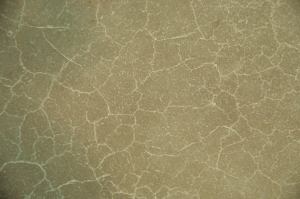
If you have noticed a fine network of shallow cracks—often resembling a spiderweb or a shattered eggshell—on your concrete surface, you are likely looking at craze cracks. While they can be aesthetically concerning, understanding the science behind them can help you determine the best course of action for your project.
Craze cracks (or crazing) are minute, interconnected surface cracks that form a grid-like pattern, typically in 2-inch diameters. Unlike structural cracks, crazing is strictly a surface phenomenon.
Technical Specifications:
Width: Usually 0.1 mm (0.004 inches) or less.
Depth: Typically no more than 1 mm (1/32-inch) deep.
Visibility: Often invisible until the concrete is wet and begins to dry.
Despite their appearance, craze cracks do not affect the structural performance or durability of a slab. They do not widen or deepen over time.
Crazing occurs when the immediate surface of the concrete dries and shrinks faster than the underlying mass. This differential shrinkage is typically triggered by environmental factors during the placement and finishing process, including:
Low Humidity: Dry air pulls moisture from the surface too quickly.
High Temperatures: Both high ambient air and concrete temperatures accelerate evaporation.
Direct Sunlight & Wind: Hot sun or heavy breezes during finishing can “bake” the top layer before the slab has set.
Over-Troweling: Excessive finishing can bring too much water and “fines” (cement paste) to the surface, creating a weak layer prone to shrinkage.
Prevention is the most effective way to manage crazing. Concrete contractors can minimize the risk by implementing these best practices:
Immediate Curing: Start the curing process as soon as possible after final finishing.
Moist Curing: Utilizing water-mist or wet burlap is the most effective method, though high-quality spray-on curing compounds are also beneficial.
Optimized Mix Design: Use a “stiffer” mix with a lower water-to-cement ratio to reduce overall shrinkage.
Environmental Shielding: Use windbreaks or sunshades in extreme weather conditions.
Broom Finishes: For exterior slabs, a broom finish is often preferred over a hard-troweled finish, as it masks minor surface blemishes.
Crazing is just one form of shrinkage-related cracking. It is important to distinguish it from more significant issues:
| Crack Type | Timing | Characteristics | Primary Cause |
| Craze Cracking | Shortly after finishing | Shallow, map-like patterns | Rapid surface drying |
| Plastic Shrinkage | While concrete is still “plastic” | Deeper, wider, spaced further apart | Rapid evaporation before setting |
| Drying Shrinkage | After concrete hardens | Full-depth or structural cracks | Loss of moisture in the core matrix |
Pro Tip: To control drying shrinkage, ensure joints are placed properly—usually at a distance (in feet) that is 2 to 3 times the slab thickness (in inches). For example, a 6-inch slab should have joints every 15 to 18 feet.
Technically, there is no structural need to repair crazing because the cracks do not deteriorate. In fact, attempting to fix them can often make them more visible:
Sealers and Hardeners: These products often settle into the fine cracks, highlighting the pattern rather than hiding it.
The Only “Fix”: If the aesthetic impact is unacceptable to the owner, the only reliable solution is the application of a thin concrete overlay or a micro-topping to create a brand-new surface layer.
By following proper curing protocols and managing the evaporation rate during installation, you can ensure a smooth, professional finish that remains free of surface crazing.
My name is John de Saint Georges and I own The Inspection Company LLC. I have been living in West Virginia for the last 10 years and have loved every minute of it. From the New and Greenbrier rivers and Snowshoe Mountain, this state has it all. I hope I can help you look over your new home here in the mountain state. I will let you know everything that you may need to know about your new home
Whether it’s a 1000-square-foot loft, a rambling country estate, or 6000-square-foot commercial building, I won’t rest until you’ve received my easy-to-read report and all of your questions have been answered.
The Inspection Company uses the latest home inspection software to deliver you a visual, modern home inspection report that explains our findings in a way you can understand.

Feel free to book any inspections after the 25th. Thanks